
Server data from the Official MCP Registry
Deterministic, non-generative image transform MCP server: reproducible recipes, immutable originals.
About
Deterministic, non-generative image transform MCP server: reproducible recipes, immutable originals.
Security Report
Valid MCP server (2 strong, 1 medium validity signals). No known CVEs in dependencies. Package registry verified. Imported from the Official MCP Registry.
10 files analyzed · 1 issue found
Security scores are indicators to help you make informed decisions, not guarantees. Always review permissions before connecting any MCP server.
How to Install
Add this to your MCP configuration file:
{
  "mcpServers": {
    "io-github-gridhra-atx-mcp": {
      "args": [
        "-y",
        "atx-mcp"
      ],
      "command": "npx"
    }
  }
}Documentation
View on GitHubFrom the project's GitHub README.
atx-mcp


A deterministic (non-generative) asset transformation MCP server for general-purpose AI agents, written in Rust.
It executes editing intent — "level the horizon, crop to 16:9, brighten it up a touch" — as a declarative transform recipe, and tracks every result as an immutable revision. The original asset is never modified.
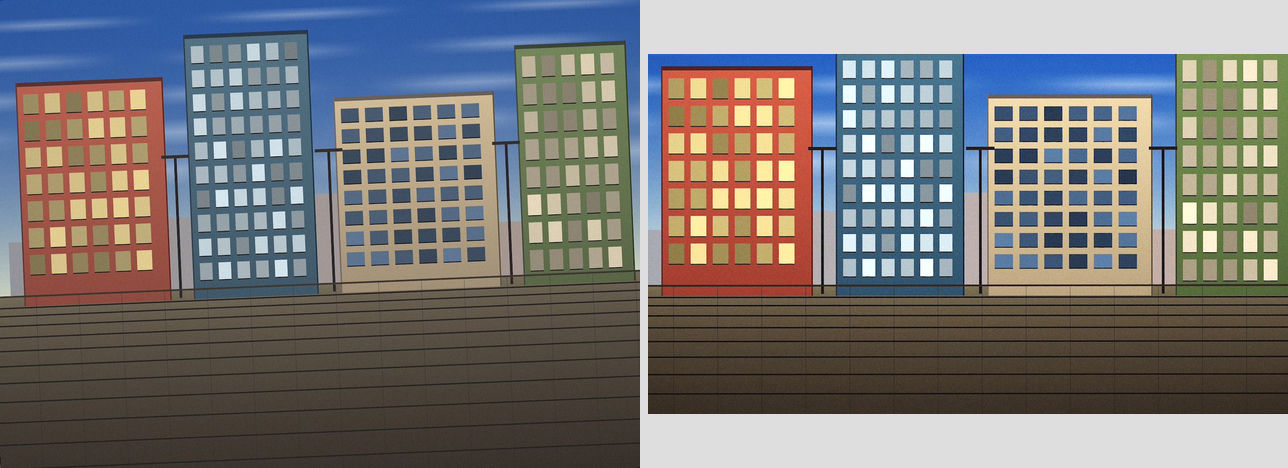 Tilt correction + auto levels + a look applied (a fully deterministic recipe) — left: input / right: output.
See docs/DESIGN.md for the full design.
Use cases
-
Eye-catch image for an article
"Straighten this photo and crop it to a 16:9, 1600px eye-catch. WebP."
import_asset→detect_tilt(the AI skips correction when it's already near-level) →apply_transform(rotate → crop → resize → encode) →export_asset. The original is never touched, and the same recipe reproduces the same result every time. -
Multiple sizes for social/CMS
"Generate the OGP, Instagram square, and thumbnail versions of this photo." One original fans out into OGP 1200×630, Instagram 1080 square, and a 400px thumbnail in parallel. The same-recipe-same-revision idempotency means re-running never double-creates output; a one-word preset name works too.
-
Safe to publish
"Strip the location data for sure, but don't touch the colors."
strip_metadata(exif) removes EXIF including GPS while keeping the ICC profile intact. The AI can also warn ahead of time by checkinghas_gpsfrominspect_image. -
Color and look adjustments
"Make just the sky bluer, leave everything else alone." Covers
curves/levels/hsl/white_balance, thefilm_softpreset, and importing your own.cubeLUT withimport_assetthen applying it withlut. -
Local (masked) adjustments
"Darken just the sky a bit, keep the ground as is."
generate_maskbuilds a mask (gradient, luminosity range, or hue range); after wiring it into the adjustment,render_previewwithoverlay:"mask"shows exactly where it will bite before you commit. -
Layer compositing
"Blur a copy of this photo and blend it in at 50% screen for a soft glow." The
layersstack combines 16 blend modes, opacity, and masks to build reproducible composites like soft focus. -
Watermarks, retouching, and perspective
"Stamp my logo in the corner, remove the power lines, and fix the converging verticals."
svg_overlayburns in a logo,clone/healremove blemishes or wires by compositing both texture and tone, andperspectivecorrects converging verticals. -
Reading documents (OCR pre-processing)
"Read this receipt photo for me." / "What does this slide say?"
detect_documentfinds the page or screen and returns aperspectivequad ready to paste, theocr_documentpreset (grayscale, auto levels, light sharpen) andtrimconcentrate the pixel budget on the text, andrender_previewwithlong_edge:1568hands the model an image it can actually read. No OCR engine is bundled: the model does the reading, atx only makes the pixels legible and reproducible.detect_text_blocksanswers the question that decides the rest — "will this text survive the downscale, and where do I cut?" — by returning the text blocks in reading order plus ready-to-pastecropbands.threshold(Otsu / Sauvola) andocr_binarizeexist for external OCR engines. -
Verification and accountability
"Show me this image before and after the edits, side by side."
compare_revisionsplaces before/after side by side, or returns a difference heatmap with stats likemean_abs_diff. Every revision keeps its lineage, so the full edit history behind any image used in an article can be traced and reproduced — byte-identical on any machine.
What atx doesn't do — generative editing, RAW development, ML-based auto-cropping, OCR itself — is out of scope; see docs/DESIGN.md for the roadmap.
Install
atx-mcp is a single self-contained binary with no runtime dependencies. Pick one of the following.
1. cargo binstall (prebuilt binary, no compilation)
cargo binstall atx-mcp
claude mcp add --scope user asset-transform -- atx-mcp --workspace /path/to/asset-workspace
cargo-binstall downloads the
release archive built by this repository's CI instead of compiling, so this is
the fastest route for anyone who already has a Rust toolchain. (--scope user
makes the server available in every project; omit it for the current project
only.)
2. cargo install (builds from source)
cargo install atx-mcp
Works on any platform a Rust toolchain supports, including ones without a prebuilt binary. Needs a C compiler as well (libwebp is built from its vendored source).
3. Prebuilt binary (no Rust toolchain)
Installer scripts (default install location is ~/.local/bin, or
%LOCALAPPDATA%\Programs\atx-mcp on Windows; the archive is verified against
SHA256SUMS before extraction):
# macOS / Linux
curl -fsSL https://raw.githubusercontent.com/gridhra/atx-mcp/main/scripts/install.sh | sh
# Windows
irm https://raw.githubusercontent.com/gridhra/atx-mcp/main/scripts/install.ps1 | iex
To download manually, grab atx-mcp-<version>-<target>.tar.gz (.zip on
Windows) from Releases.
Supported targets:
| Platform | Target triple |
|---|---|
| macOS (Apple Silicon) | aarch64-apple-darwin |
| macOS (Intel) | x86_64-apple-darwin |
| Linux x86_64 | x86_64-unknown-linux-musl (statically linked, no glibc required) |
| Linux arm64 | aarch64-unknown-linux-musl (statically linked, no glibc required) |
| Windows x86_64 | x86_64-pc-windows-msvc |
claude mcp add asset-transform -- ~/.local/bin/atx-mcp --workspace /path/to/asset-workspace
4. Docker
ghcr.io/gridhra/atx-mcp is a FROM scratch image holding the statically
linked binary and nothing else (linux/amd64 and linux/arm64).
claude mcp add asset-transform -- \
  docker run -i --rm -v "$PWD:/workspace" ghcr.io/gridhra/atx-mcp:0.6.2
Two things to keep in mind. -i is required: the server speaks the MCP
stdio transport and needs stdin to stay open. And paths are container
paths: the directory you bind-mount appears as /workspace inside the
container, so import_asset and export_asset take paths like
/workspace/photos/shot.jpg, not host paths.
5. npx (Node.js 18+, nothing to install)
The prebuilt native binary for your platform is pulled in automatically via
optionalDependencies.
claude mcp add --scope user asset-transform -- npx -y atx-mcp --workspace /path/to/asset-workspace
Or add it directly to your MCP client config:
{
  "mcpServers": {
    "asset-transform": {
      "command": "npx",
      "args": ["-y", "atx-mcp", "--workspace", "/path/to/asset-workspace"]
    }
  }
}
--workspace (env: ATX_WORKSPACE) is the directory used as the asset store.
It is created automatically if it doesn't exist.
Tools (13)
| Tool | Role |
|---|---|
list_operations | Compact catalog of the recipe vocabulary: every operation with a one-line description and terse parameter hints, plus the built-in preset names. Optional category:"geometry"|"color"|"filter"|"output" narrows it (read-only) |
explain_operation | Full reference for one operation: parameter table (type, range, required/default, semantics), ready-to-paste JSON examples and gotchas. A built-in preset name works too and returns its full operation list. An unknown name returns the valid operations and presets, grouped (read-only) |
import_asset | Import a local image into the workspace (sha256-idempotent). Takes path for one file or paths for a batch of up to 64 (a failing file does not abort the batch). Warns via already_derived_from when the bytes are already the output of a recipe in this workspace |
inspect_image | Inspect dimensions, EXIF summary, ICC profile, presence of GPS data, luma statistics, a sharpness score (variance of the Laplacian — relative, so compare it against a known-good capture of the same subject) and a perceptual_hash (dHash, 16 hex digits) for "is this the same picture?". include_exif:true additionally returns every EXIF field as {ifd, tag, value} entries — off by default because the full dump can carry GPS coordinates and names (read-only) |
detect_tilt | Estimate tilt angle via Canny+Hough (coarse) plus a projection profile (sub-0.1° refinement). Also returns horizontal/vertical family estimates; the full score curve is opt-in via include_score_curve:true. Returns "do not correct" when confidence is low (read-only) |
detect_document | Find the dominant quadrilateral (page, screen, whiteboard, sign) via Canny + contours and return it as a perspective-ready quad (tl, tr, br, bl) with confidence, area_ratio, an output_size_hint and a paste-ready suggested_operation. Returns quad:null with a reason (no_quad_found / already_rectified / low_confidence) rather than guessing (read-only) |
detect_text_blocks | Find the text-like blocks (headline, paragraphs, table, caption) via Otsu binarization + run-length smearing + connected components, in reading order, each with line_count, median_line_height_px and ink_ratio. legibility.line_height_at_1568_px says whether the text survives a downscale to long edge 1568 (below ~16px it usually does not), and legibility.recommended_bands splits the image into horizontal bands that clear that bar — each entry is already a crop operation to paste before render_preview (read-only) |
generate_mask | Generate a deterministic grayscale mask (linear_gradient / radial_gradient / luminosity_range / color_range) as a PNG revision with the same dimensions as the reference image, to be referenced from an operation's mask field (idempotent) |
render_preview | Apply a recipe (or a preset) at low resolution (long edge ≤768 by default, long_edge 256..1568 to hand a vision model a legible page) and return it as an inline image. overlay:"grid"|"thirds"|"horizon" overlays composition guide lines, and overlay:"mask" (with mask_revision_id) tints the coverage of a mask (drawn on the preview only; it has no effect on the actual transform). Also reports estimated_vision_tokens, a rough width*height/750 budget for the returned image |
apply_transform | Apply a recipe (or a preset) at full resolution and produce a new revision (the same recipe always yields the same revision). Takes revision_id for one image or revision_ids to run the same recipe over a batch of up to 64 |
compare_revisions | Downscale two revisions to long edge ≤640 and return them composited into a single inline image, arranged via layout:"side_by_side"|"stacked" (for A/B and before/after visual comparison), or layout:"diff" for a single pixel-difference heatmap plus mean_abs_diff/max_abs_diff/changed_pixel_ratio and an ssim score (requires equal dimensions). Every layout also reports perceptual_hash_distance, the Hamming distance between the two dHash values (≤5 usually means the same picture re-encoded or resized, ≥20 means two different pictures) |
list_assets | Read the revision ledger (read-only) |
export_asset | Write revisions out of the workspace: revision_id + dest_path for one file, or revision_ids + dest_dir for up to 64 at once, named by filename_template (default "{revision_id}.{ext}", also {index} / {stem}). An existing file is only overwritten when overwrite:true is explicitly set, and it never writes inside the workspace store or through a symbolic link |
Recipe example
{
  "operations": [
    { "op": "rotate", "angle_degrees": -1.8 },
    { "op": "crop", "aspect_ratio": "16:9" },
    { "op": "resize", "width": 1600 },
    { "op": "encode", "format": "webp", "quality": 82 }
  ]
}
Supported ops (29): auto_orient / rotate / perspective / crop (crop,
pad) / trim / resize (cover, contain, fill) / adjust / color_matrix /
curves / levels / lut / white_balance / hsl / blur / median /
unsharp_mask / convolve / threshold / clone / heal / svg_overlay /
flip / vignette / grain / gradient_map / pixelate / auto_levels /
encode (jpeg, png, webp, avif) / strip_metadata.
The operation vocabulary is deliberately kept out of the tool schemas: call
list_operations for the up-to-date catalog and explain_operation for one
operation's full schema, examples and gotchas.
LUT (.cube)
A .cube 3D/1D LUT is an asset, not an image: import it first, then point a
recipe at the revision it produced.
import_assetthe.cubefile. It is stored as an immutable revision withmime_type: "application/x-cube"(inspect_imagerefuses it on purpose — it is not an image).- Reference the returned
revision_idfrom a recipe:
{ "op": "lut", "lut_revision_id": "rev_...", "strength": 0.8 }
strength (0..1, default 1.0) blends linearly with the original. Because
revisions are immutable, including the referenced id in the recipe_hash keeps
the transform fully deterministic — but it also means the recipe is only
reproducible inside a workspace that holds that LUT, so move the .cube
alongside the recipe when you move a look between machines. Referencing an
unknown id fails with a structured error before any pixel work happens.
SVG overlays (logos and watermarks)
An .svg is a vector asset, like a .cube LUT: import it first, then stamp
it onto a raster image from a recipe.
import_assetthe.svgfile. It is stored as an immutable revision withmime_type: "image/svg+xml", and the summary reports the SVG's intrinsic size (0x0means it has none — noviewBoxand no absolutewidth/heighton the root<svg>).inspect_imagerefuses it on purpose: it is a vector asset, not a raster image.- Reference the returned
revision_idfrom a recipe:
{ "op": "svg_overlay", "svg_revision_id": "rev_...",
  "x": 24, "y": 24, "width": 320, "opacity": 0.25, "blend_mode": "normal" }
x/y are the overlay's top-left corner in the coordinates of the image
at that point in the pipeline (so put the overlay after your resize/crop);
negative values are allowed and the overflow is clipped. Omit width and
height to rasterize at the SVG's intrinsic size, give one to scale while
preserving the aspect ratio, or give both to stretch to an exact box — an SVG
with no intrinsic size is a structured error unless you give both. Compositing
uses the same W3C formula and the same 16 blend_mode values as
layers.
Text in an SVG
atx never reads system fonts: the installed fonts differ from machine to machine
and would break byte-for-byte reproducibility. <text> is therefore skipped
unless you ask for it:
{ "op": "svg_overlay", "svg_revision_id": "rev_...", "x": 120, "y": 80,
  "width": 48, "render_text": true, "font_revision_ids": ["rev_..."] }
render_textdefaults tofalse, which keeps the old behaviour exactly (the shapes render, the glyphs do not, and the result carries a warning). Converting text to paths in your vector editor still works and needs no font at all.render_text:truedraws the text with one bundled font, Roboto Regular (embedded in the binary), plus any fonts you pass infont_revision_ids(up to 4). Nothing else is ever loaded, so the output is identical on every machine.- A font is an asset like a LUT or an SVG:
import_asseta.ttf/.otffile, and the summary reports the family names to write infont-family. Japanese and other CJK text needs an imported font — Roboto has no CJK glyphs, and characters missing from every loaded font render as boxes and are counted in a warning.inspect_imagerefuses a font revision on purpose: it is an asset, not an image.
Masks (local adjustments)
A mask is a grayscale image revision: its BT.709 luma is the weight, so white
means "apply this operation at full strength" and black means "leave the pixel
alone". Any of the 14 tone/filter ops (adjust, color_matrix, curves,
levels, hsl, lut, white_balance, blur, median, unsharp_mask,
convolve, grain, gradient_map, auto_levels) accepts one.
generate_maskbuilds one deterministically against a reference image, with exactly that image's dimensions:
kind | Parameters | What it selects |
|---|---|---|
linear_gradient | angle_degrees (0 = white at the top fading down, positive = clockwise), start, end (0..1 positions along the axis where the weight goes 1→0) | A graduated filter (skies, foregrounds) |
radial_gradient | center_x, center_y (0..1 relative), radius (0..1 of the half-diagonal), feather (0..1 extra falloff band) | A vignette or a subject spotlight |
luminosity_range | min, max (0..255), feather (luma units of soft shoulder outside the range) | Highlights, midtones or shadows |
color_range | hue_center (0..360), hue_width (1..180 half-width), feather (extra degrees) | One hue family (sky blue, foliage green) |
You can also import_asset your own grayscale image instead.
- Attach the returned
revision_idto an operation:
{ "op": "curves", "master": [[0,0],[128,168],[255,255]],
  "mask": { "revision_id": "rev_...", "invert": false, "feather_px": 8.0 } }
invert (default false) flips the weight to 1-w; feather_px (default
0.0) blurs the mask edge by that gaussian sigma in pixels of the current
image.
render_previewwithoverlay:"mask"andmask_revision_idtints the preview red where the weight exceeds 0.5 and dims it elsewhere, so the coverage can be checked before committing.
Masks are referenced by revision id exactly like LUTs, so the same caveat applies: the recipe hash includes the id, and the recipe only reproduces inside a workspace that holds that mask.
Layers
A recipe may carry a layers stack instead of (or in addition to) a flat
operations list. Layers composite bottom-to-top, each layer's ops run
against its own source before it is blended onto the running composite:
{
  "layers": [
    { "source": "base", "ops": [] },
    {
      "source": { "revision_id": "rev_..." },
      "ops": [{ "op": "blur", "sigma": 8 }],
      "blend_mode": "multiply",
      "opacity": 0.6
    }
  ],
  "operations": [
    { "op": "resize", "width": 1600 },
    { "op": "encode", "format": "webp", "quality": 82 }
  ]
}
sourceis either"base"(the input revision passed toapply_transform/render_preview) or{"revision_id": "rev_..."}(any other revision already in the workspace). Every layer's source must match the base image's dimensions exactly, or the recipe fails with a structured error before any pixel work happens.opsis a normal operations list, applied to that layer's source alone.mask,blend_mode(default"normal") andopacity(default1.0) control how the layer composites onto the layers below it.- Blend mode is one of 16 W3C modes: the 12 separable modes
normal,multiply,screen,overlay,darken,lighten,color_dodge,color_burn,hard_light,soft_light,difference,exclusion, plus the 4 non-separable modeshue,saturation,color,luminosity. - When
layersis present, the top-leveloperationsbecomes the finishing pass, applied once to the composited result — this is whereresizeand the finalencodebelong (encodemust still be last and appear at most once). - Call
explain_operation {"operation":"layers"}for the full reference.
Presets
A preset can also be inlined inside a recipe as a single operation —
{"op": "preset", "name": "ocr_document"} — so a named look can be combined with
your own ops. The macro expands in place before anything runs, so the recipe
hashes exactly as if you had written the preset's operations out by hand, and a
preset that carries layers cannot be inlined (that is a structured error).
Call explain_operation {"operation":"preset"} for the rules.
apply_transform and render_preview take either recipe (the raw DSL) or
preset (a built-in named recipe from crates/atx-mcp/presets/) — exactly one of
the two:
| Set | Preset | What it does |
|---|---|---|
| basics | eyecatch_16_9 | Center-crop to 16:9, resize to 1600px wide, WebP q82 |
| basics | film_soft | Soft film look: gentle S-curve plus a 15% pull towards luma |
| basics | product_clean | Clean product shot: near-neutral white balance, levels lift, light sharpen |
| basics | thumbnail_square | Center-crop to 1:1, resize to 800x800, WebP q80 |
| basics | web_optimize | Fit inside 2000x2000 without upscaling, WebP q80 |
| basics | grayscale | Black and white via a BT.709 luma color_matrix |
| basics | sepia | Classic sepia tone via color_matrix |
| film | film_warm | Warm film stock: amber white balance, soft S-curve, light grain |
| film | film_cool | Cool film stock: blue-leaning white balance, soft S-curve, light grain |
| film | matte_fade | Faded matte: lifted blacks via curves, slight desaturation |
| film | film_grain_strong | Heavy, coarse grain over a gentle S-curve (pushed/high-ISO look) |
| film | cinema_teal_orange | Teal-and-orange cinematic grade via targeted hsl shifts |
| mono | bw_neutral | Neutral black and white via a BT.709 luma color_matrix |
| mono | bw_high_contrast | High-contrast black and white: luma conversion plus a strong S-curve |
| mono | bw_red_filter | B&W through a simulated red filter (classic sky darkener) |
| mono | bw_soft | Soft, low-contrast black and white (matte curve) |
| mono | duotone_navy_cream | Navy-to-cream duotone via gradient_map |
| editorial | product_white | Auto levels stretch, neutral white balance, final sharpen |
| editorial | food_vivid | Warm orange/yellow saturation boost plus a contrast lift |
| editorial | portrait_soft | Soft matte curve, light desaturation, subtle vignette |
| editorial | landscape_punch | Contrast + saturation lift plus a light vignette |
| editorial | architecture_clean | Auto levels, sharpen, slight desaturation (pair with a manual perspective op) |
| social | og_1200x630 | Open Graph share image: crop 1200:630, resize to 1200 wide, WebP q82 |
| social | x_wide_16_9 | X (Twitter) wide card: crop 16:9, resize to 1600 wide, WebP q82 |
| social | instagram_square_1080 | Instagram square post: crop 1:1, resize to 1080x1080, WebP q85 |
| social | instagram_portrait_4_5 | Instagram portrait post: crop 4:5, resize to 1080x1350, WebP q85 |
| social | youtube_thumb_1280x720 | YouTube thumbnail: crop 16:9, resize to 1280x720, WebP q85 |
| social | hero_2400 | Large hero/banner image: fit inside 2400px, WebP q85 |
| building block | soft_vignette | Subtle vignette on its own, for stacking after other looks |
| building block | grain_fine | Light, fine, deterministic grain on its own, for stacking |
| ocr | ocr_document | Make a page/slide/whiteboard photo legible for a vision model: grayscale, auto levels, light sharpen (no binarization) |
| ocr | ocr_receipt | Noisy or faded receipts: grayscale, median denoise, stronger auto levels, sharpen |
| ocr | ocr_binarize | Sauvola adaptive binarization for external OCR engines (prefer ocr_document when a vision model reads the result) |
| ocr | ocr_dark_ui | Dark-mode screenshots: trim the margins, then invert to dark-on-light grayscale |
A preset is pure sugar: it resolves to its recipe and flows through the normal
pipeline, and the recipe_hash (the idempotency key) is computed on the
resolved recipe — so a preset call and the equivalent raw recipe land on the
same revision.
Guarantees
- Deterministic: the same input + the same recipe always produces byte-identical output (regression-checked with golden tests)
- Idempotent: recipes are normalized (keys sorted,
f64values quantized to a 1e-6 grid) and hashed with sha256. If(input revision, recipe hash)matches an existing pair, the existing revision is returned instead of a new one - Originals are protected:
objects/is an append-only, content-addressed store — there is no delete or overwrite API
Development
cargo test --workspace     # unit + integration + property (proptest) tests
cargo clippy --workspace --all-targets -- -D warnings
Crate layout: atx-core (recipe/transform engine) / atx-geometry (tilt
detection) / atx-store (immutable asset store) / atx-mcp (rmcp stdio server).
The three libraries are published on crates.io under longer names, because
atx-core there is an unrelated project:
| Directory | Published as | Library name in code |
|---|---|---|
crates/atx-core | asset-transform-core | atx_core |
crates/atx-geometry | asset-transform-geometry | atx_geometry |
crates/atx-store | asset-transform-store | atx_store |
crates/atx-mcp | atx-mcp | atx_mcp (binary atx-mcp) |
So to use the transform engine as a library, depend on
asset-transform-core = "0.6.2" and write use atx_core::….
Name
"atx" stands for Asset Transform; the trailing x follows the
familiar shorthand for "transform" (as in xform / tx). It was chosen as a
short, easy-to-type binary name and directory prefix (crates/atx-core,
etc.), and it has no relation to the PC ATX form factor or Markdown ATX-style
headings. The crates.io packages spell the name out in full
(asset-transform-core, and so on).
License
MIT. See LICENSE.
Non-crate material shipped inside the binary (the bundled Roboto Regular font) is listed with its source and license in THIRD_PARTY_NOTICES.md.
If atx-mcp saves you time, you can buy me a coffee ☕
Reviews
No reviews yet
Be the first to review this server!
More Developer Tools MCP Servers
Git
Freeby Modelcontextprotocol · Developer Tools
Read, search, and manipulate Git repositories programmatically
Fetch
Freeby Modelcontextprotocol · Developer Tools
Web content fetching and conversion for efficient LLM usage
Paperclip
Freeby Paperclipai · Developer Tools
Trending hip-hop artist momentum scores across four cultural dimensions.
Toleno
Freeby Toleno · Developer Tools
Toleno Network MCP Server — Manage your Toleno mining account with Claude AI using natural language.
mcp-creator-python
Freeby mcp-marketplace · Developer Tools
Create, build, and publish Python MCP servers to PyPI — conversationally.
MCP Marketplace
Freeby mcp-marketplace · Developer Tools
Search and install MCP servers from inside your AI client.