
Server data from the Official MCP Registry
Cinema-quality science visualization for AI agents — headless VTK via MCP.
About
Cinema-quality science visualization for AI agents — headless VTK via MCP.
Security Report
viznoir is a well-structured MCP server for VTK-based scientific visualization with solid security foundations. File path validation prevents directory traversal attacks, environment variable configuration isolates credentials, and no dangerous patterns like hardcoded secrets or arbitrary code execution were detected. Minor code quality concerns around error handling breadth and input validation comprehensiveness do not significantly impact security given the server's legitimate need for file I/O and network access. Supply chain analysis found 6 known vulnerabilities in dependencies (1 critical, 3 high severity). Package verification found 1 issue.
4 files analyzed · 13 issues found
Security scores are indicators to help you make informed decisions, not guarantees. Always review permissions before connecting any MCP server.
Permissions Required
This plugin requests these system permissions. Most are normal for its category.
What You'll Need
Set these up before or after installing:
Environment variable: VIZNOIR_RENDER_BACKEND
Environment variable: VIZNOIR_OUTPUT_DIR
How to Install
Add this to your MCP configuration file:
{
  "mcpServers": {
    "io-github-kimimgo-viznoir": {
      "env": {
        "VIZNOIR_OUTPUT_DIR": "your-viznoir-output-dir-here",
        "VIZNOIR_RENDER_BACKEND": "your-viznoir-render-backend-here"
      },
      "args": [
        "-y",
        "www"
      ],
      "command": "npx"
    }
  }
}Documentation
View on GitHubFrom the project's GitHub README.
viznoir
VTK is all you need. Cinema-quality science visualization for AI agents.





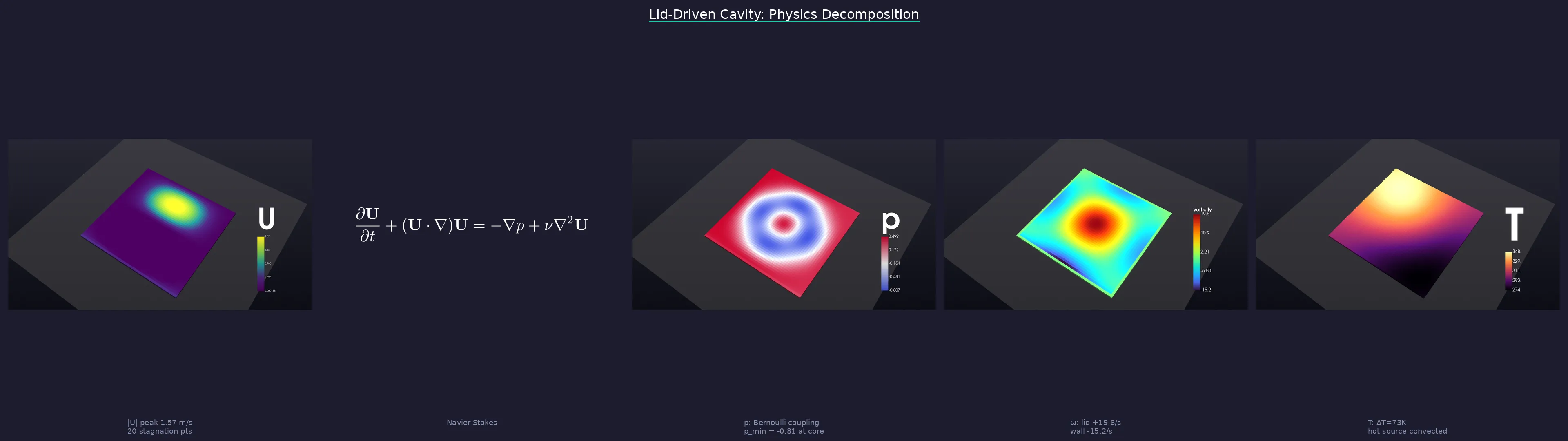
One prompt → physics analysis → cinematic renders → LaTeX equations → publication-ready story.
What it does
An MCP server that gives AI agents full access to VTK's rendering pipeline — no ParaView GUI, no Jupyter notebooks, no display server. Your agent reads simulation data, applies filters, renders cinema-quality images, and exports animations, all headless.
Works with: Claude Code · Cursor · Windsurf · Gemini CLI · any MCP client
Quick Start
1. Install
pip install viznoir

# With optional extras
pip install "viznoir[mesh]"       # meshio + trimesh (50+ formats)
pip install "viznoir[composite]"  # Pillow + matplotlib (split_animate)
pip install "viznoir[all]"        # everything
Requires Python ≥3.10. VTK wheel auto-installed (EGL headless rendering supported).
2. Verify
mcp-server-viznoir --help    # server entry point
python -c "import viznoir; print(viznoir.__version__)"
3. Use with an MCP client
Add to your MCP client config (claude_desktop_config.json, ~/.cursor/mcp.json, etc.):
{
  "mcpServers": {
    "viznoir": {
      "command": "mcp-server-viznoir",
      "env": {
        "VIZNOIR_DATA_DIR": "/path/to/your/simulation/data",
        "VIZNOIR_OUTPUT_DIR": "/path/to/output"
      }
    }
  }
}
Then ask your AI agent:
"Open cavity.foam, render the pressure field with cinematic lighting, then create a physics decomposition story."
4. Or use as a Python library (advanced)
All tool implementations are importable as async functions. You provide a VTKRunner and await the result:
import asyncio
from viznoir.core.runner import VTKRunner
from viznoir.tools.inspect import inspect_data_impl
from viznoir.tools.render import render_impl

async def main():
    runner = VTKRunner()

    meta = await inspect_data_impl(file_path="cavity.foam", runner=runner)
    print(meta["fields"], meta["timesteps"])

    result = await render_impl(
        file_path="cavity.foam",
        field_name="p",
        runner=runner,
        colormap="Cool to Warm",
        camera="isometric",
        width=1920, height=1080,
        output_filename="pressure.png",
    )
    print(result.file_path)

asyncio.run(main())
See docs for the full tool reference.
Capabilities
| Category | Tools |
|---|---|
| Rendering | render · cinematic_render · batch_render · volume_render |
| Filters | slice · contour · clip · streamlines · pv_isosurface |
| Analysis | inspect_data · inspect_physics · extract_stats · analyze_data |
| Probing | plot_over_line · integrate_surface · probe_timeseries |
| Animation | animate · split_animate |
| Comparison | compare · compose_assets |
| Export | preview_3d · execute_pipeline |
22 tools · 12 resources · 4 prompts · 50+ file formats (OpenFOAM, VTK, CGNS, Exodus, STL, glTF, …)
Showcase — 10 Domains, One Pipeline
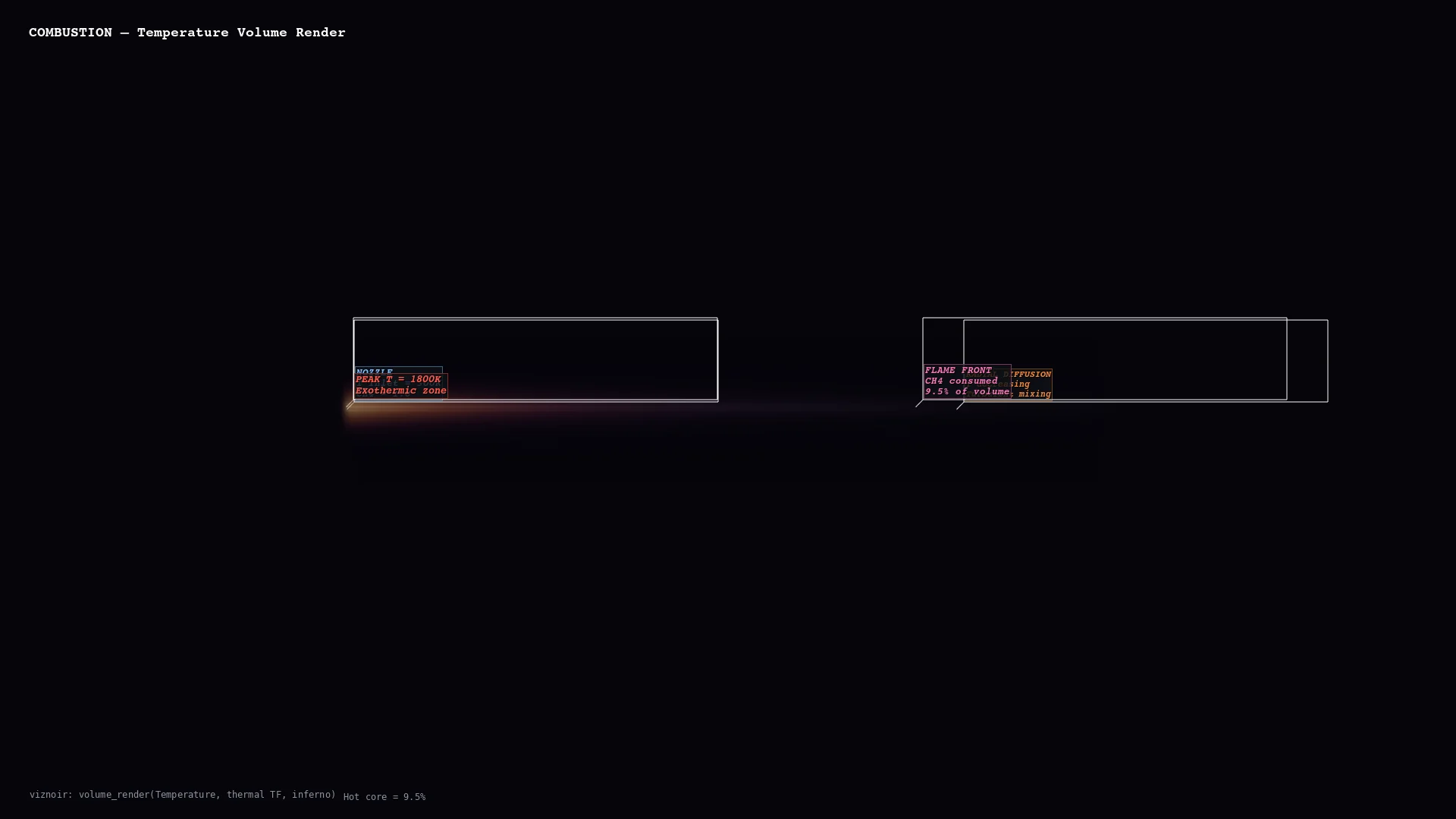
Every frame below is a single MCP tool call. No GUI, no post-processing, no ParaView. Annotations are rendered inside the 3D scene via VTK-native text actors and leader lines — no Photoshop, no matplotlib overlay.
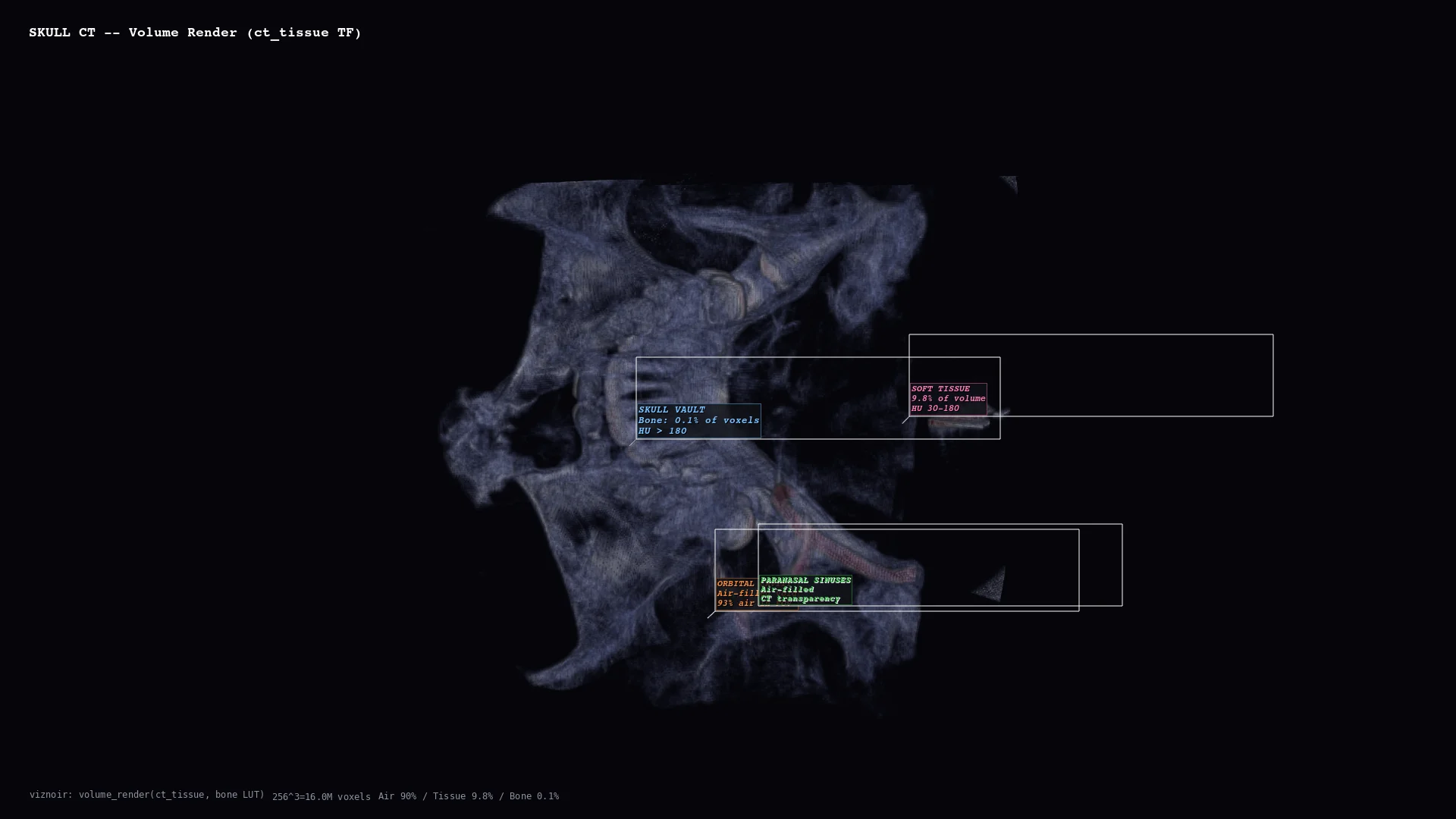 | 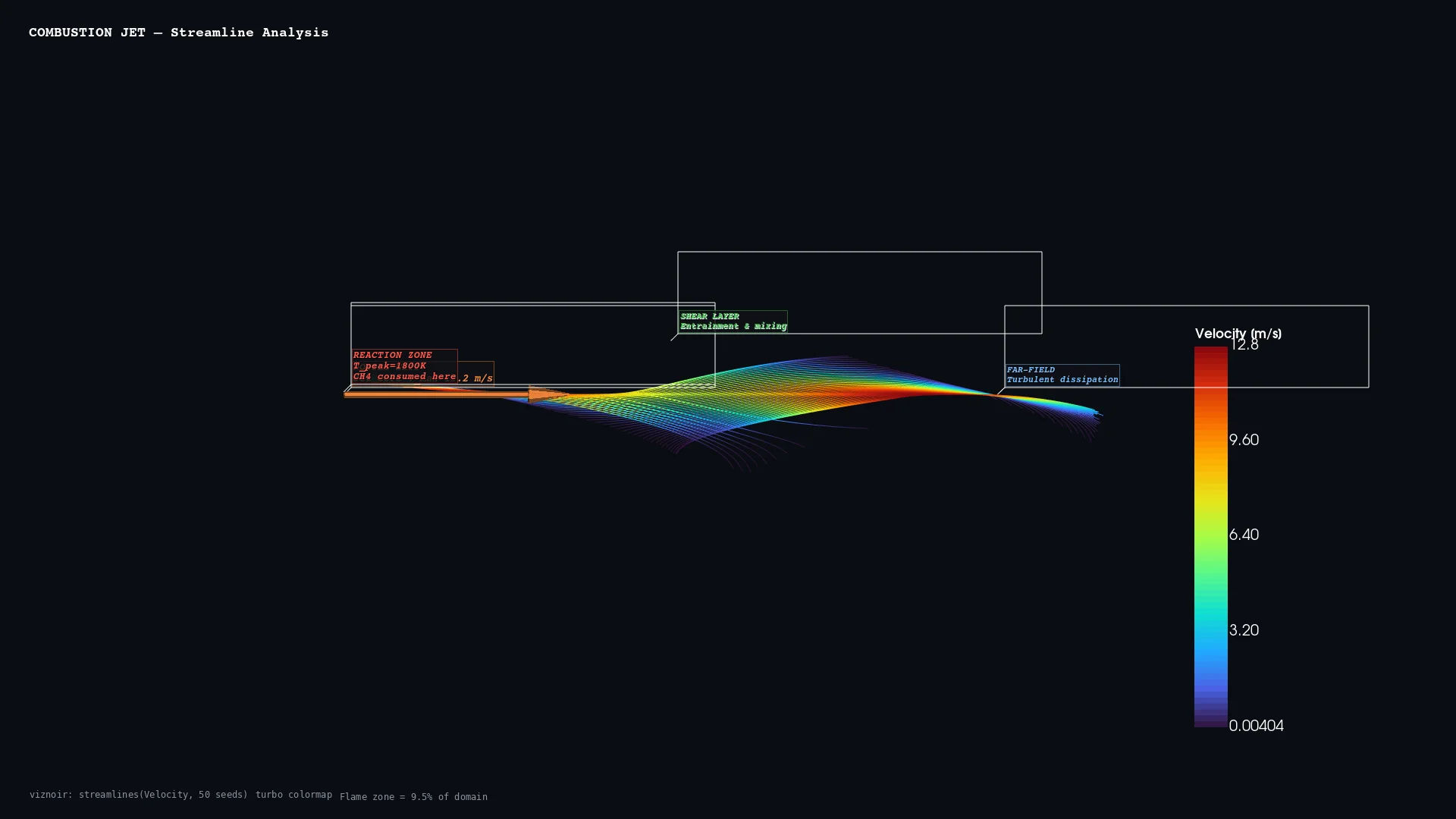 | 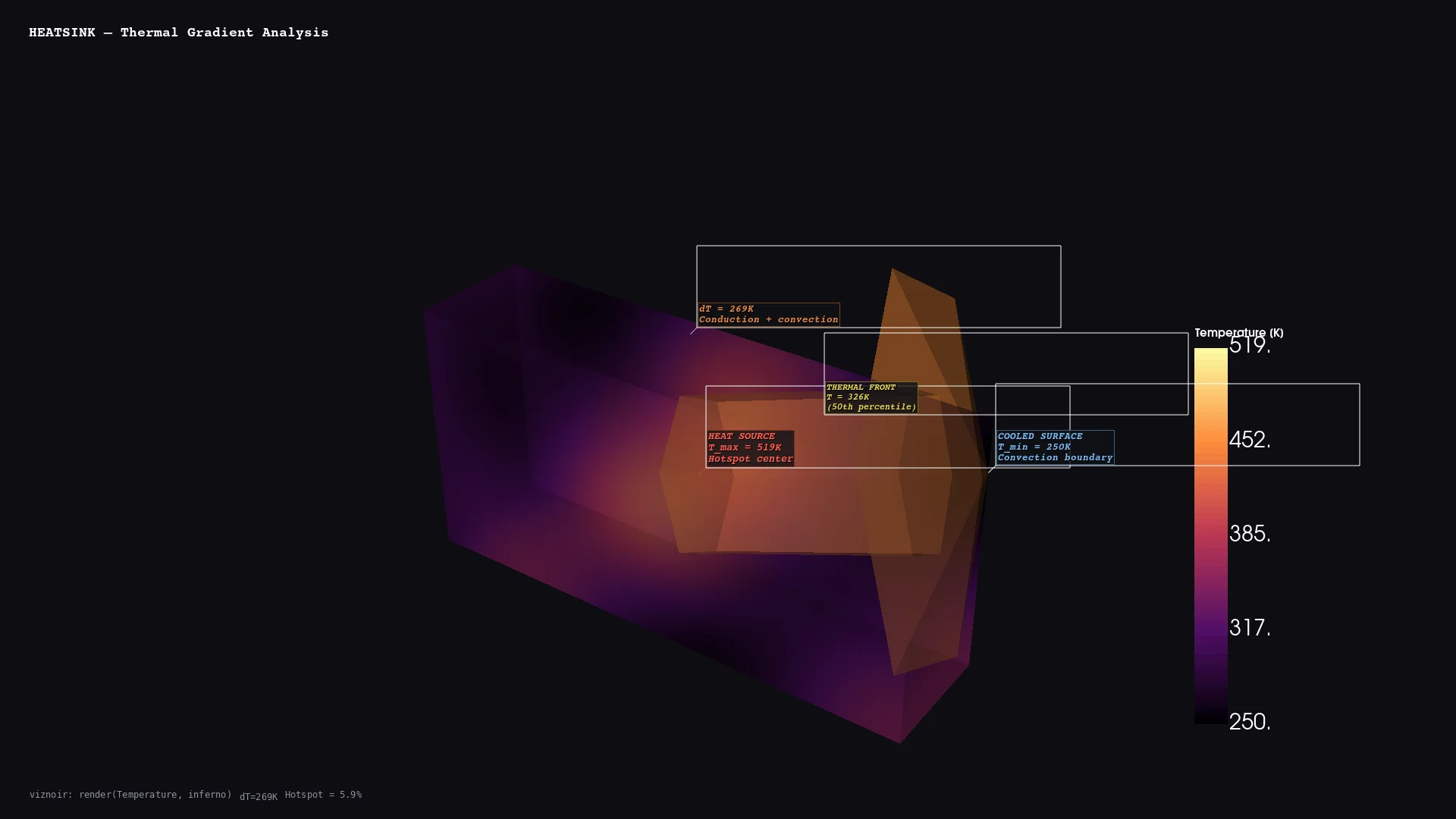 | 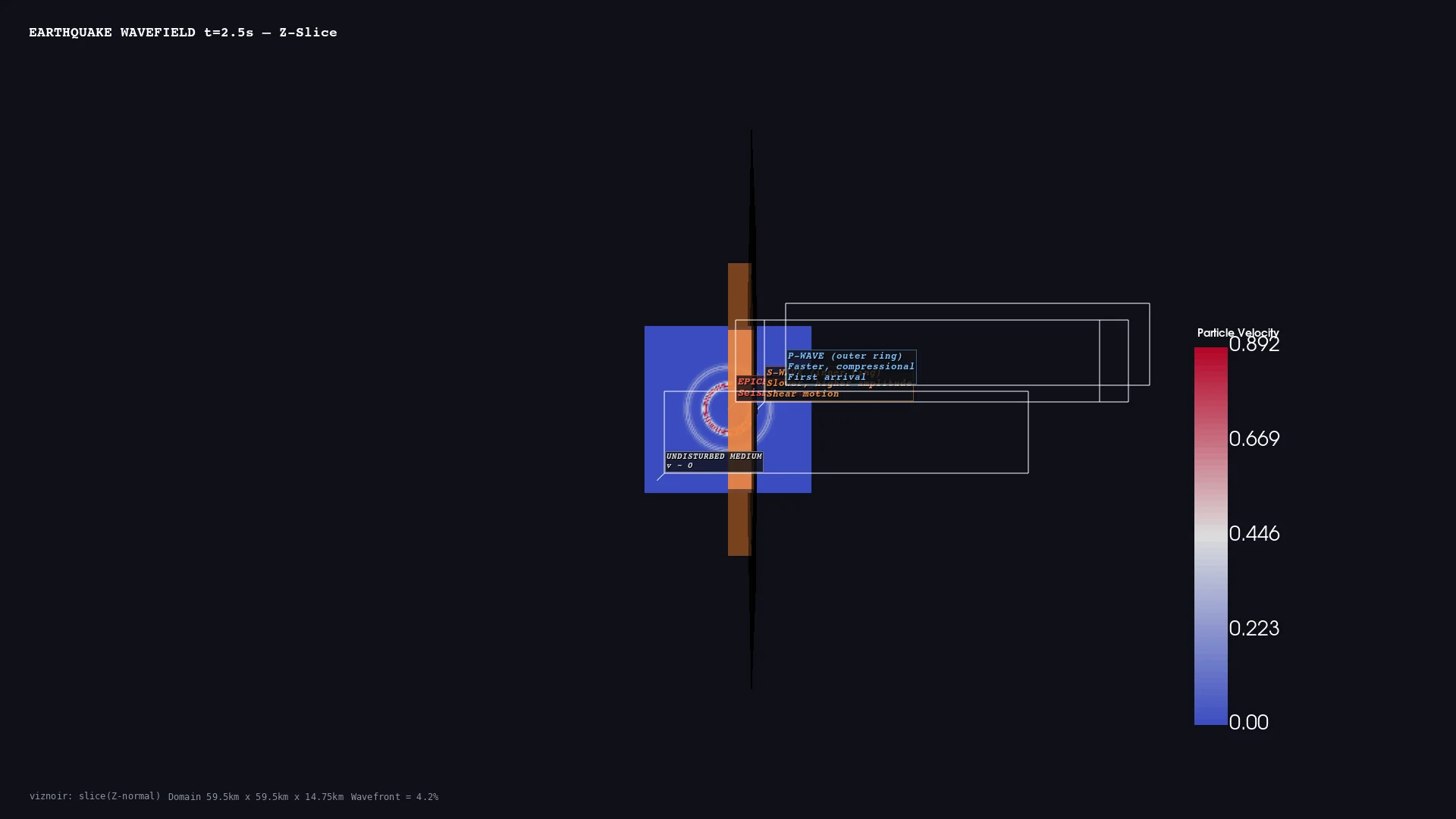 | 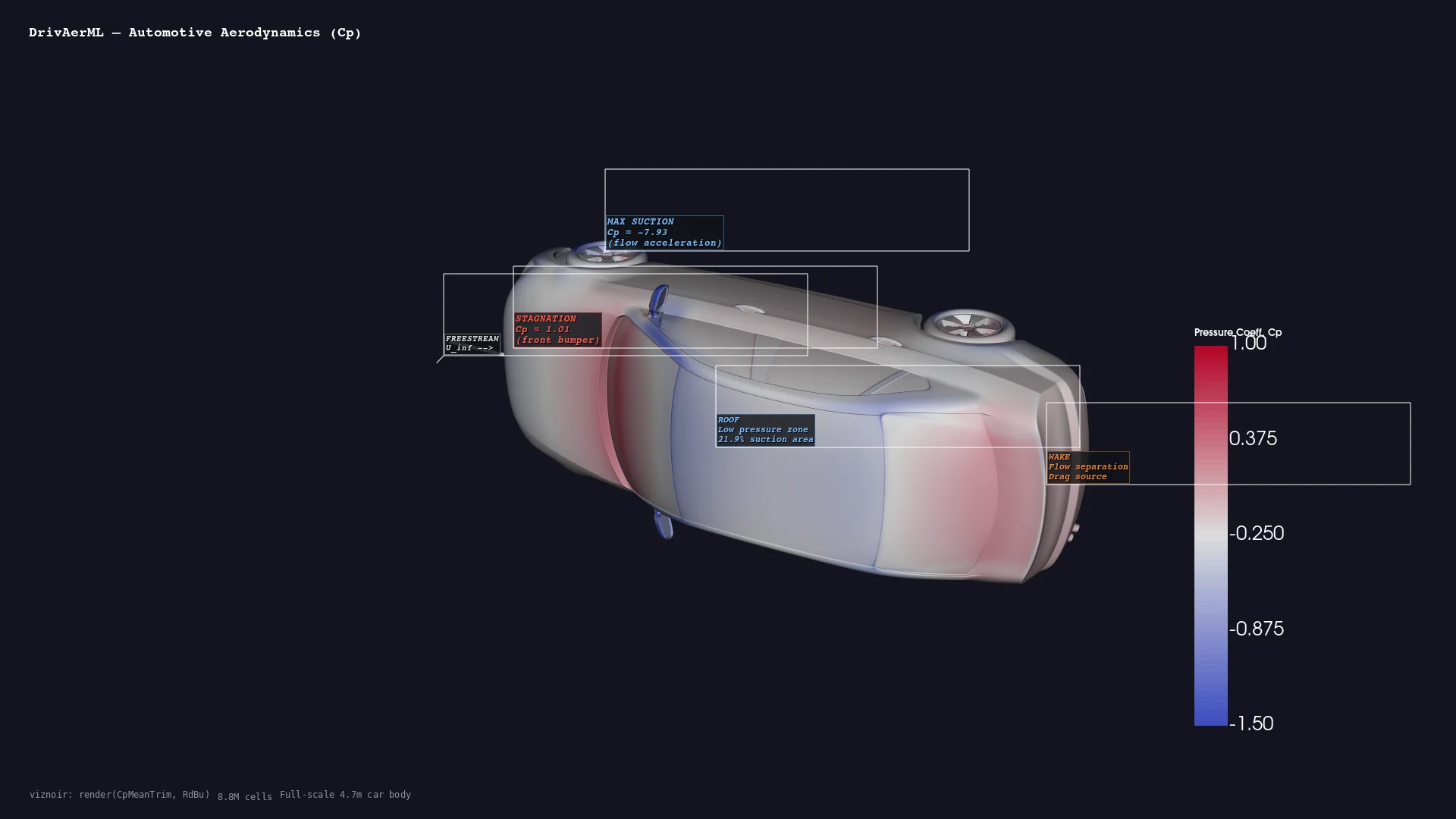 |
| Medical CT skull volume | CFD Combustion streamlines | Thermal Heatsink gradient | Geoscience Seismic wavefield | Automotive DrivAerML · 8.8M cells |
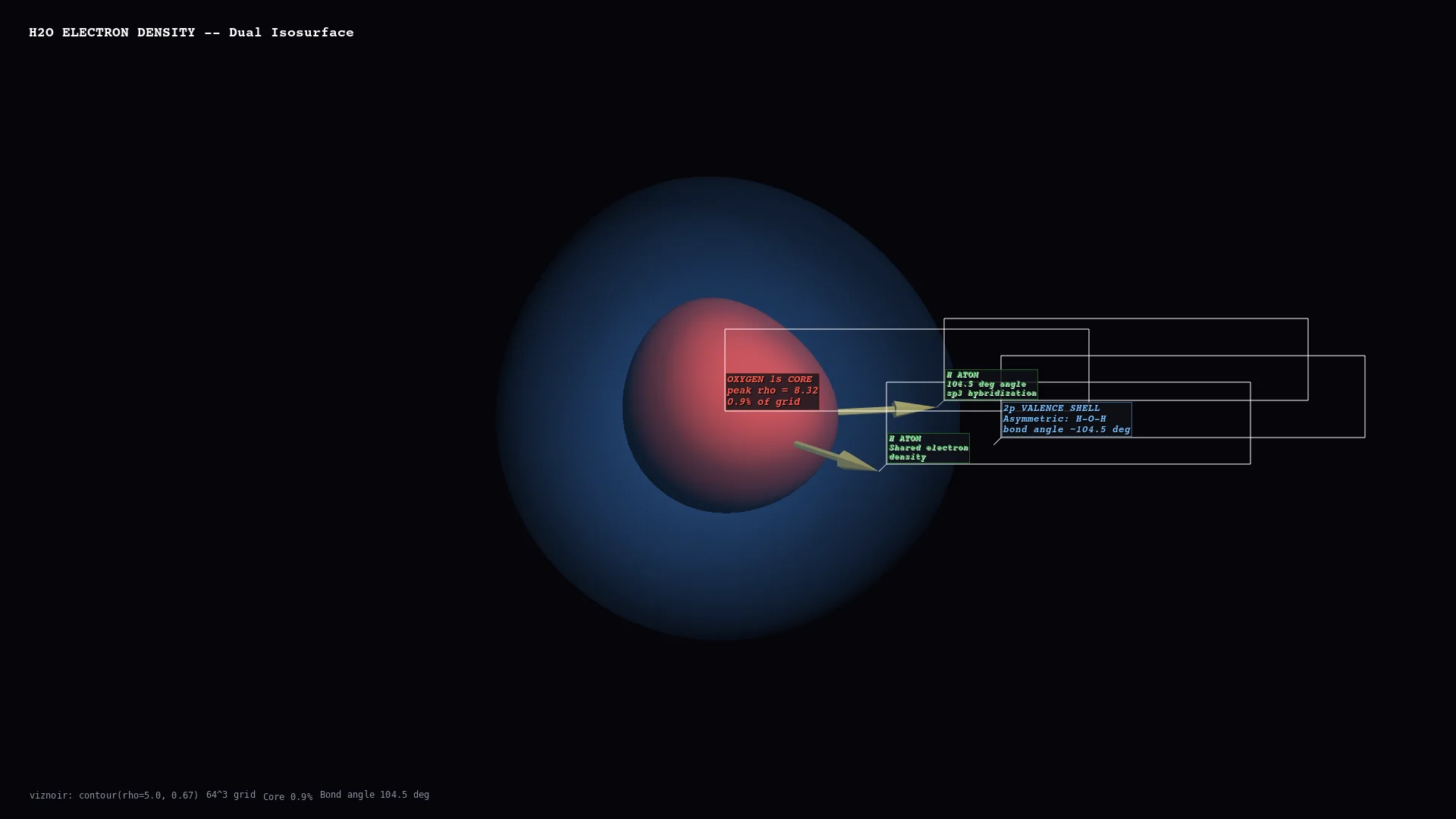 | 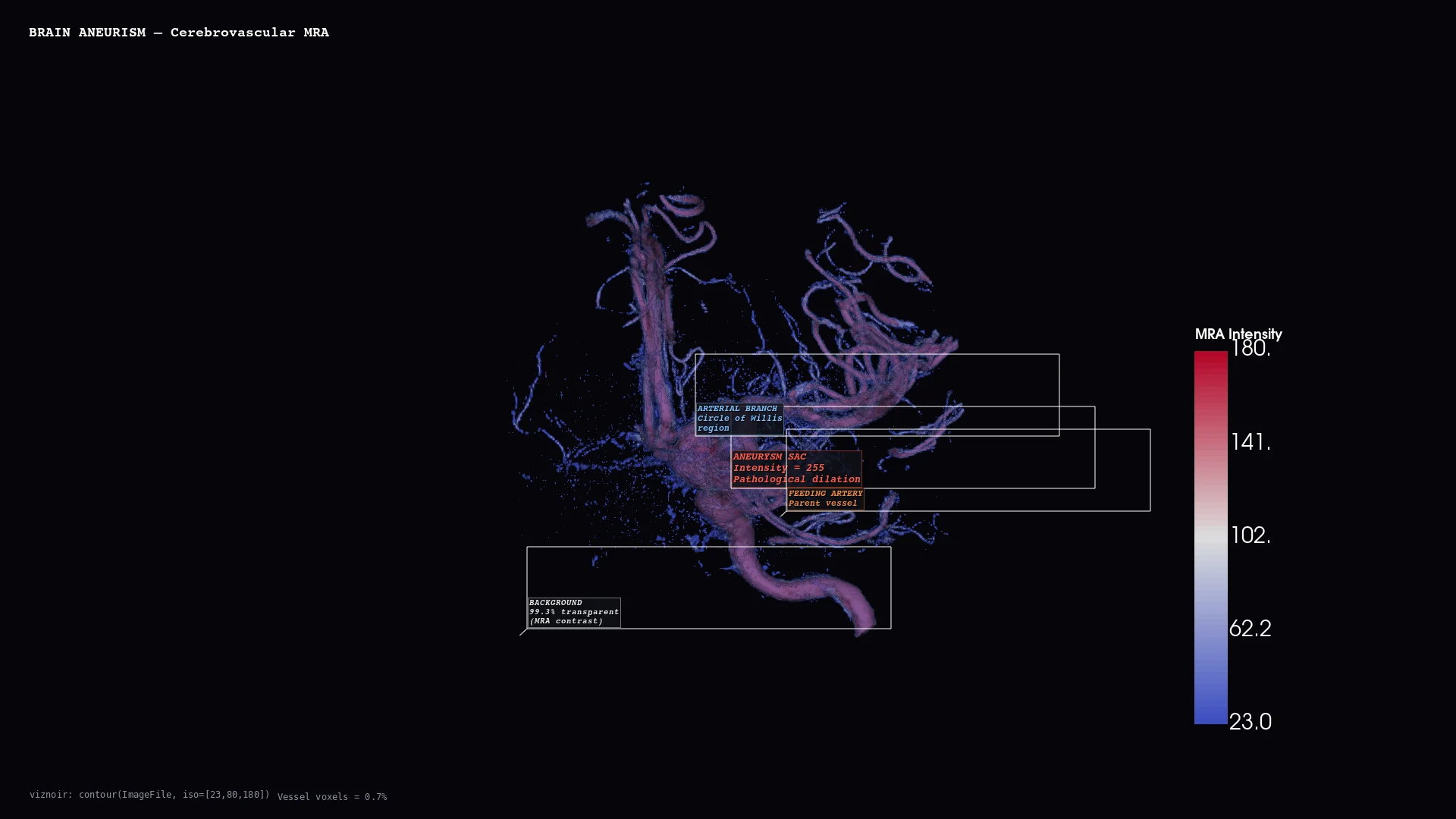 | 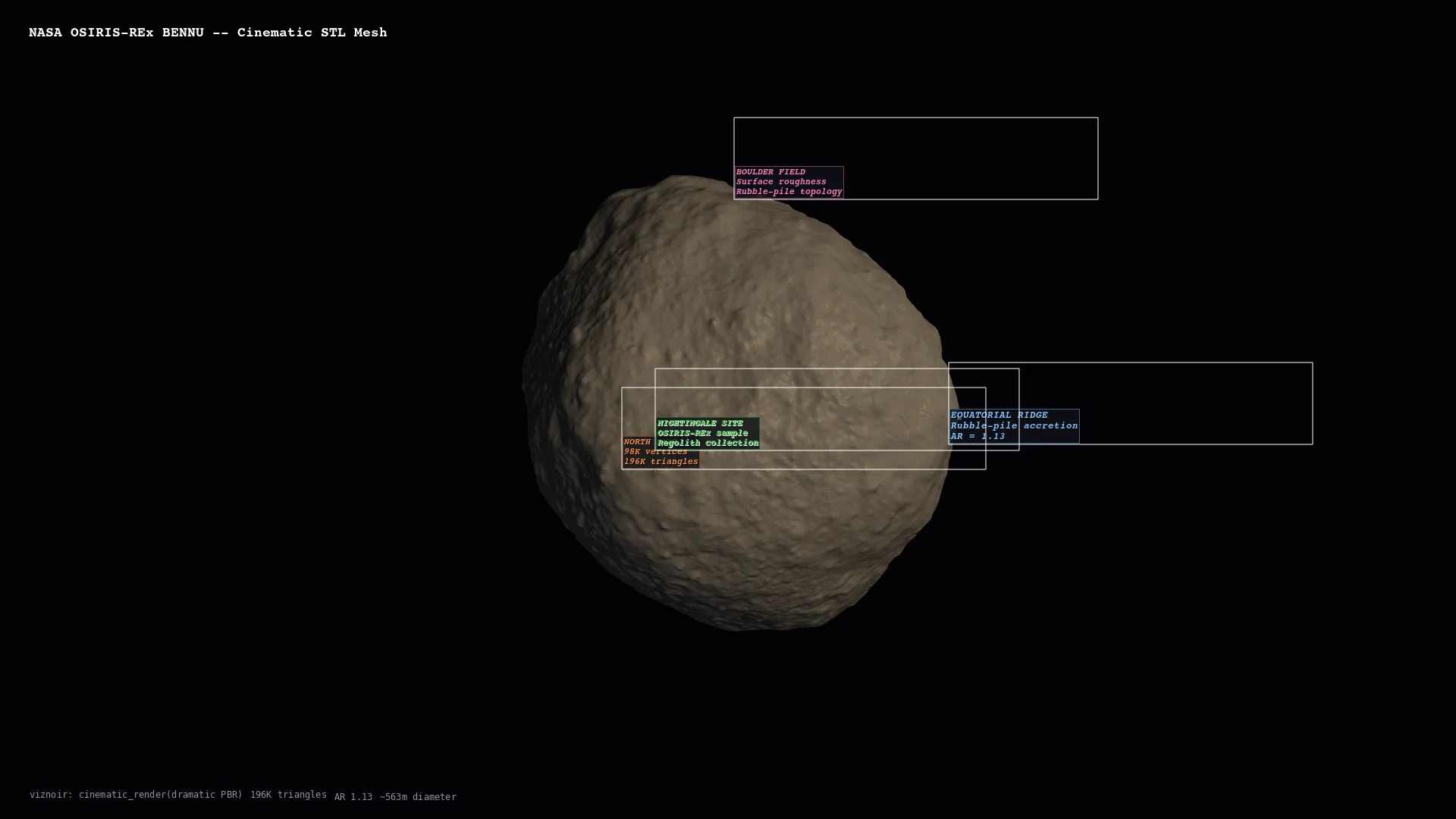 | 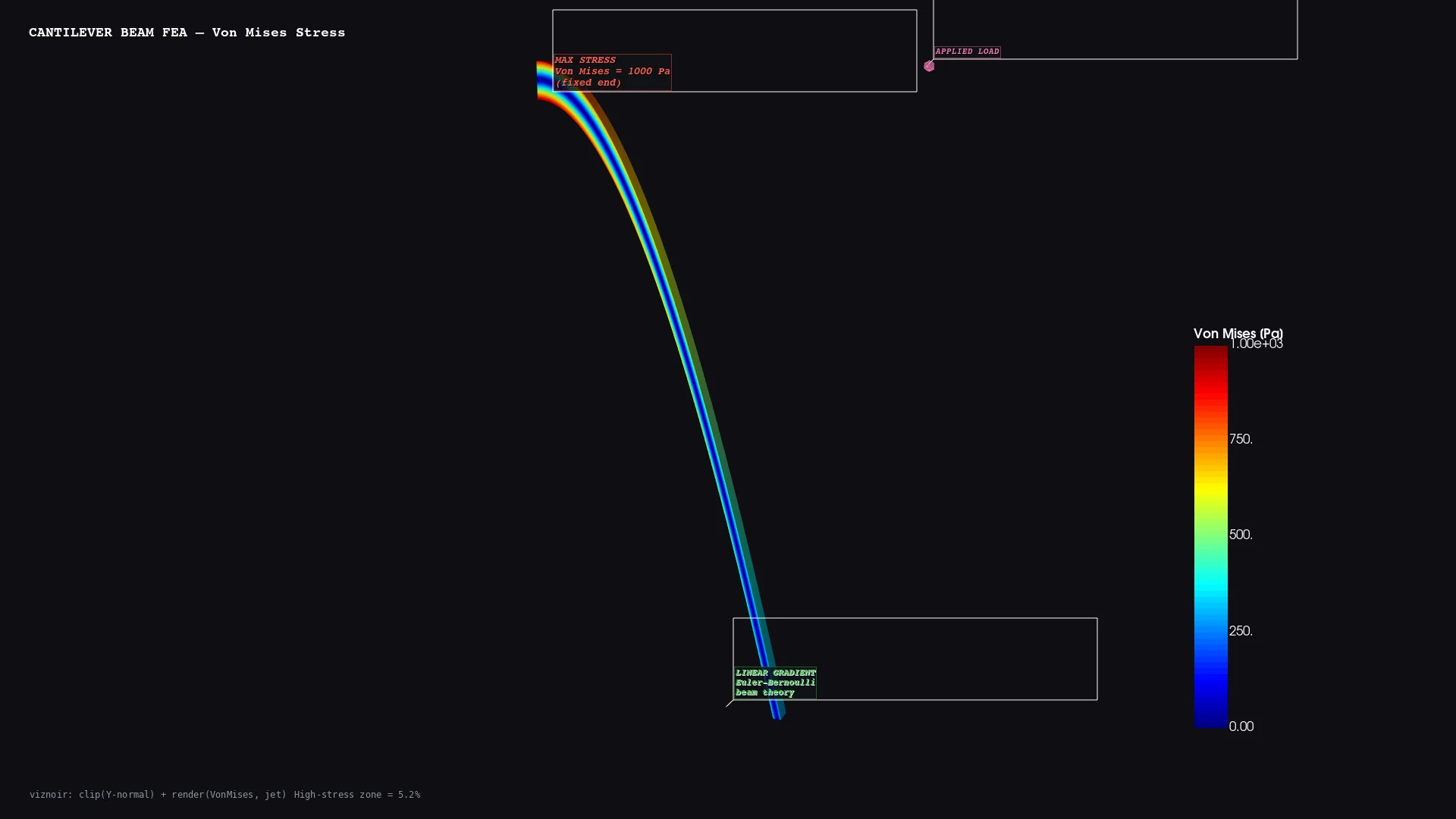 |  |
| Molecular H₂O electron density | Vascular Cerebral aneurysm MRA | Planetary Bennu · 196K triangles | Structural Cantilever FEA stress | Volume Thermal threshold |
Physics-Aware Animations
Seven presets convert raw simulation data into publication-ready motion — each binds a rendering primitive to a physical phenomenon.
| Preset | Physics | Rendering |
|---|---|---|
streamline_growth | Lagrangian advection | Particle path-line extension over time |
clip_sweep | Pressure gradient cross-section | Moving clip plane |
layer_reveal | CT density classification | Progressive isosurface stacking |
iso_sweep | Orbital topology | Isovalue sweep with camera orbit |
warp_oscillation | Structural mode shape | Warp-by-vector harmonic displacement |
light_orbit | Oblique illumination | Rotating key light for material reveal |
threshold_reveal | Feature hierarchy | Threshold peeling from outside → in |
Story Composition (compose_assets)
Inspect → render → annotate → compose → narrate. One prompt produces a 4-panel physics decomposition with LaTeX-rendered governing equations.
Layouts: story (vertical narrative) · grid (N×M comparison) · slides (16:9 keynote) · video (MP4 with transitions)
Full interactive gallery: https://kimimgo.github.io/viznoir/#showcase
Architecture
  prompt                    "Render pressure from cavity.foam"
    │
  MCP Server                22 tools · 12 resources · 4 prompts
    │
  VTK Engine                readers → filters → renderer → camera
    │                       EGL/OSMesa headless · cinematic lighting
  Physics Layer             topology analysis · context parsing
    │                       vortex detection · stagnation points
  Animation                 7 physics presets · easing · timeline
    │                       transitions · compositor · video export
  Output                    PNG · WebP · MP4 · GLTF · LaTeX
Numbers
| 22 MCP tools | 24 VTK filters |
| 10 domains | 19 native file formats |
| 6/6 VTK data types | 50+ formats via meshio |
Documentation
Homepage: kimimgo.github.io/viznoir
Developer docs: kimimgo.github.io/viznoir/docs — full tool reference, domain gallery, architecture guide
License
MIT
Reviews
No reviews yet
Be the first to review this server!
More Developer Tools MCP Servers
Fetch
Freeby Modelcontextprotocol · Developer Tools
Web content fetching and conversion for efficient LLM usage
Git
Freeby Modelcontextprotocol · Developer Tools
Read, search, and manipulate Git repositories programmatically
Worldmonitor
Freeby Koala73 · Developer Tools
Live markets, conflicts, country risk, chokepoints, energy, and China decision signals. 93 tools.
Toleno
Freeby Toleno · Developer Tools
Toleno Network MCP Server — Manage your Toleno mining account with Claude AI using natural language.
MCP Marketplace
Freeby mcp-marketplace · Developer Tools
Search and install MCP servers from inside your AI client.
mcp-creator-python
Freeby mcp-marketplace · Developer Tools
Create, build, and publish Python MCP servers to PyPI — conversationally.