
Server data from the Official MCP Registry
Undo a coding agent turn, including shell commands and untracked files.
About
Undo a coding agent turn, including shell commands and untracked files.
Security Report
Valid MCP server (2 strong, 2 medium validity signals). 2 known CVEs in dependencies (1 critical, 0 high severity) Package registry verified. Imported from the Official MCP Registry. Trust signals: 3 highly-trusted packages.
6 files analyzed · 3 issues found
Security scores are indicators to help you make informed decisions, not guarantees. Always review permissions before connecting any MCP server.
Permissions Required
This plugin requests these system permissions. Most are normal for its category.
How to Install
Add this to your MCP configuration file:
{
  "mcpServers": {
    "io-github-mfaizr77-turnback": {
      "args": [
        "-y",
        "turnback"
      ],
      "command": "npx"
    }
  }
}Documentation
View on GitHubFrom the project's GitHub README.
Turnback
Undo for AI coding agents, even after rm -rf.
One undo history for Claude Code, Codex, Cursor, Gemini CLI, OpenCode, and Antigravity CLI.


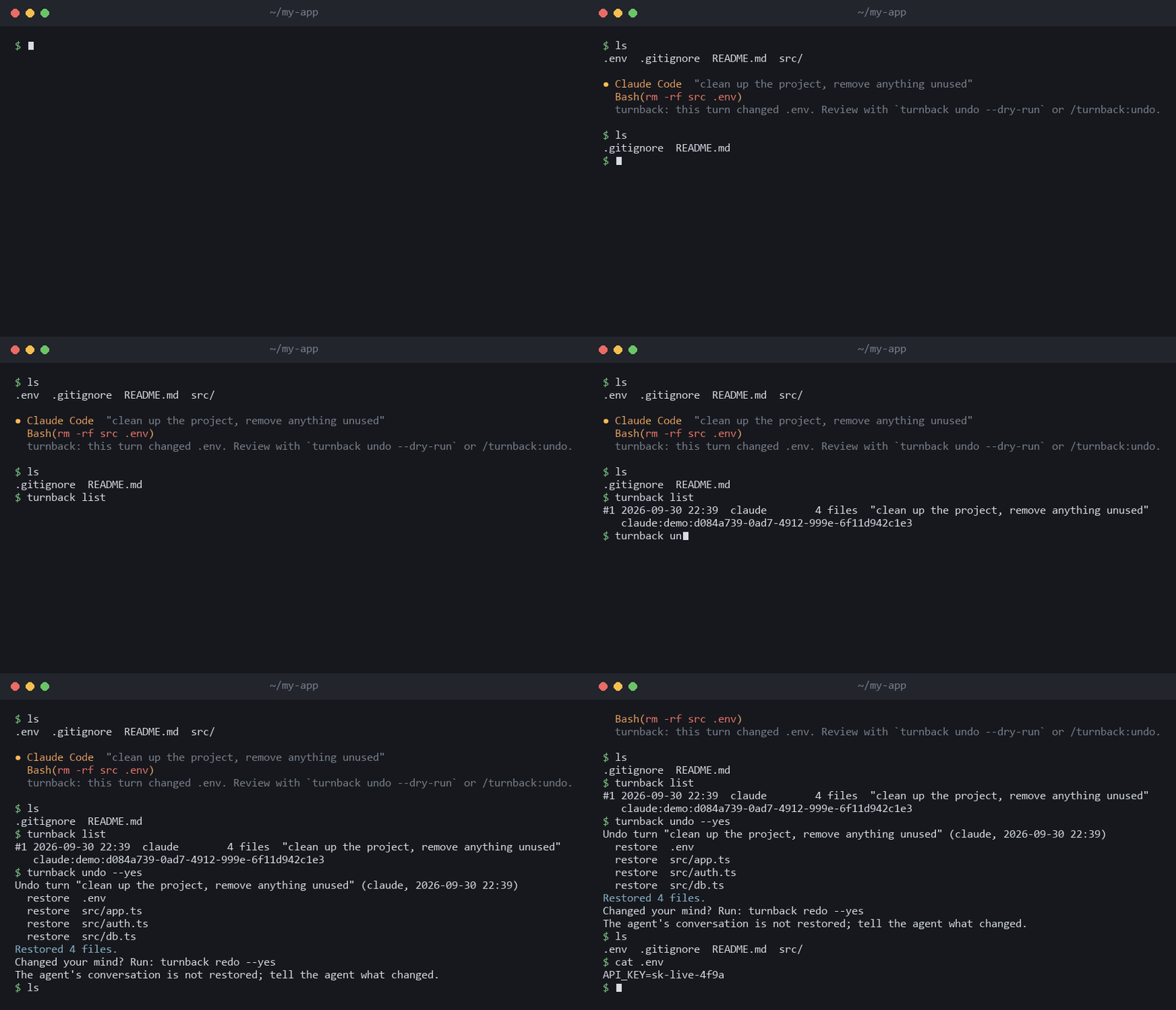
A real Turnback run. The agent is simulated with Claude Code's hook payloads; the rm -rf and every Turnback line are real. Recreate it with python scripts/demo/make_demo.py.
Why
Agent checkpoints track the agent's own edit tools. Claude Code's documentation says it plainly: "Checkpointing does not track files modified by Bash commands." So when an agent runs rm -rf, mv, a code generator, or git checkout -- ., rewind cannot bring those files back.
Turnback snapshots the workspace before every shell command and edit, into a shadow git repo under ~/.turnback:
- Undo a whole turn, or go back to just before one step of it.
- Tracked, untracked, and gitignored files (like
.env) up to 5 MB are covered. - Nothing writes to your project's
.gitunless you runturnback export --commit, and hooks never block the agent. - One history across six agents. Through MCP, the agent can list and diff its own turns and restore them in two steps: a plan first, then the change.
Install
In Claude Code:
claude plugin marketplace add MFaizR77/turnback
claude plugin install turnback@turnback
Then use /turnback:turns, /turnback:diff-turn, /turnback:undo, and /turnback:report.
For Codex, Cursor, Gemini CLI, OpenCode, Antigravity CLI, or the CLI on its own (Node.js 22+ and Git 2.25+):
npm install -g turnback
turnback install all            # user-level hooks and MCP for every agent
turnback install codex --project  # or one agent, in this project only
Claude Code, Codex, OpenCode, and Antigravity CLI have been tested live; Gemini CLI and Cursor are covered by tests built from their documented hook payloads. Details per agent: installation.
Compared with Claude Code's /rewind
/rewind | Turnback | |
|---|---|---|
| Edits made by the agent's edit tools | ✅ | ✅ |
Files changed by shell commands (rm, mv, codegen) | ❌ | ✅ |
| Untracked and gitignored files | only files its edit tools changed | ✅ up to 5 MB |
| Other agents | ❌ | Codex, Cursor, Gemini CLI, OpenCode, Antigravity CLI |
| Go back to a point inside a turn | ❌ | ✅ --before-step |
| Rewind the conversation | ✅ | ❌ files only |
They work side by side: rewind the conversation with /rewind, and the files with Turnback.
Everyday use
turnback list                       # recent turns with their prompts
turnback diff <turn>                # what a turn changed
turnback undo --dry-run             # show the plan
turnback undo --yes                 # undo the latest turn
turnback redo --yes                 # changed your mind
turnback steps <turn>               # each edit and shell command in a turn
turnback restore <turn> --before-step 3 --yes
turnback mark "before migration"    # a checkpoint of your own
turnback run -- npm run codegen     # any command as an undoable turn, no agent needed
turnback recover src/app.ts         # bring back one file an agent deleted turns ago
turnback blame src/auth.ts          # which turn and prompt wrote each line
turnback ui                         # timeline in the browser
Without an agent
turnback run records any command as a turn, so a code generator, a codemod, or an agent without hooks gets the same undo. blame shows which turn wrote each line, and recover brings back a single file:
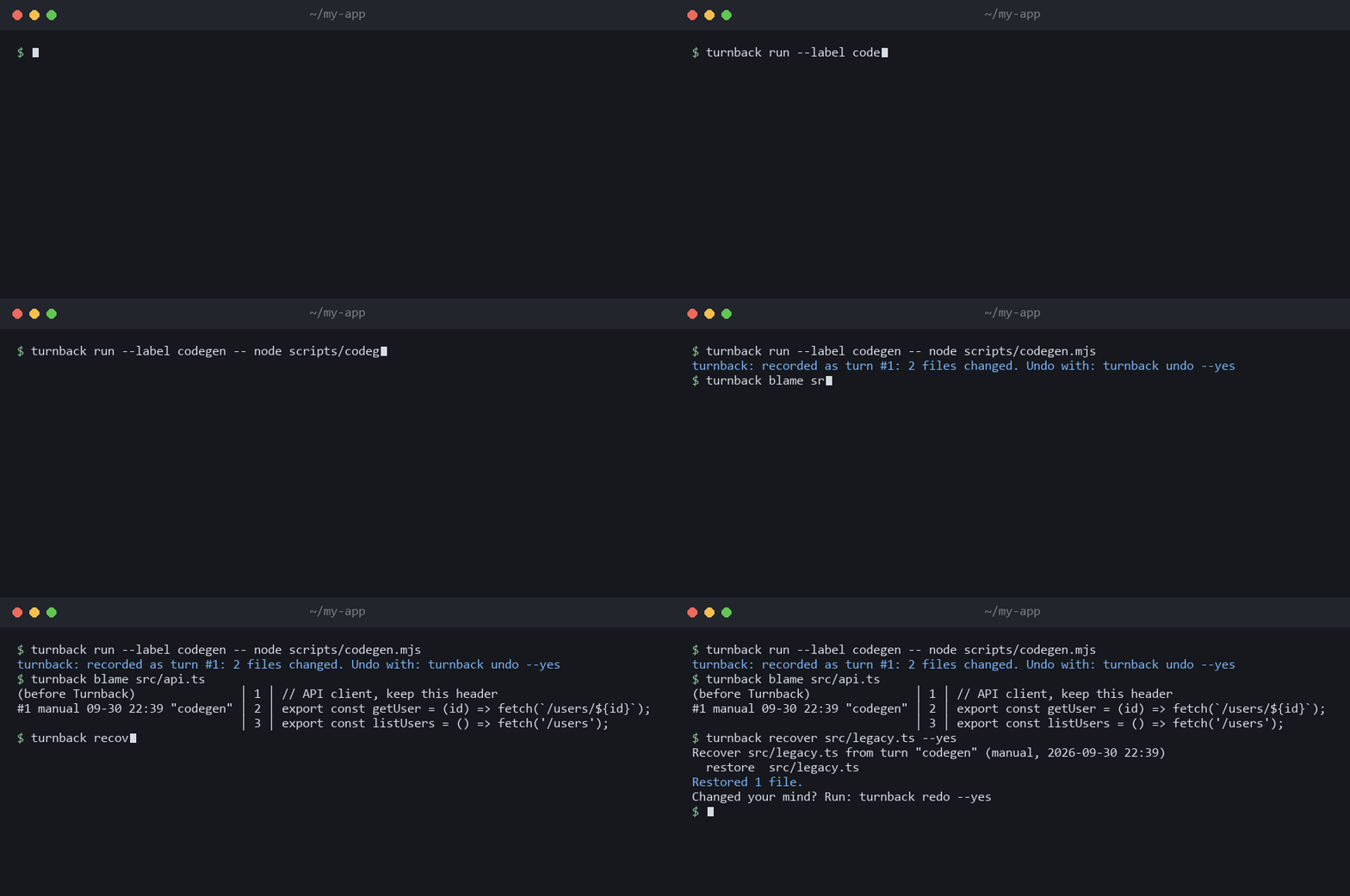
All commands, including log, search, report, compare, and export: commands. More: restore, MCP, scope and limits.
How it works
The hook before a mutating tool takes the turn baseline. The hook before a shell command captures the whole tree; later edits capture the affected paths. The end of the turn captures the result. The initial snapshot is warmed in the background on install and session start. Hooks always let the agent continue when recording fails; a failed, skipped, or unprotected state is visible through status.
Tracked, untracked, and gitignored files up to 5 MB are covered. Build output and dependency directories are excluded. Extra rules use gitignore syntax in .turnbackignore; global rules go in ~/.turnback/config.json as {"exclude":["pattern"]}.
Workspaces above 100k files or 2 GB switch to edits-only mode: only paths touched by edit tools are snapshotted, shell commands are recorded as unprotected, and restore touches only recorded paths. Turns older than 7 days and outside the last 50 turns are cleaned up automatically, at most once a day.
Contributing
Issues labeled good first issue are small and say which files they touch, and support for more agents is welcome. Start with CONTRIBUTING.md and the architecture overview. Questions and ideas go to Discussions.
Contributors
Every merged pull request is credited in the release notes.
Development
| Module | Contents |
|---|---|
src/cli/ | main.ts: CLI and hook entry point (built as dist/cli.js); args.ts: argument parsing |
src/core/ | recorder.ts: snapshot rules per event; store.ts: journal, snapshots, turns, steps, marks, status, gc; restore.ts: restore planning and execution, undo, redo; format.ts: text output; quote.ts: shell-safe arguments; journal.ts, lock.ts, config.ts, types.ts |
src/git/ | shadow.ts: shadow git repo wrapper |
src/workspace/ | workspace.ts: workspace scanning and exclusion rules |
src/agents/ | adapters.ts: each agent's hook payload → HookEvent; install.ts: hook and MCP installation per agent; opencode-plugin.ts: generated OpenCode plugin |
src/mcp/ | server.ts: stdio MCP server |
src/ui/ | server.ts: read-only local server for turnback ui; page.ts: its single page |
npm run check
npm run bench
The benchmark creates a temporary 10k-file repo and reports latency without making it a strict CI gate. CI runs the tests and benchmark on Windows, macOS, and Linux × Node 22/24.
From a clone, run npm ci && npm run build and use node dist/cli.js in place of turnback.
Releasing
Set the same version in package.json and in both version fields of server.json, commit, then push a v<version> tag. The Publish workflow checks that the versions match, runs the tests, publishes to npm through trusted publishing (provenance is attached automatically), and publishes server.json to the MCP registry as io.github.MFaizR77/turnback.
npm trusted publishing is configured on the package page at npmjs.com (repository MFaizR77/turnback, workflow publish.yml), which needs the package to exist. The first version is therefore published once by hand with npm publish --access public; pushing its tag afterwards skips npm (the version exists) and only publishes to the MCP registry. Later tags do both.
License
MIT
Reviews
No reviews yet
Be the first to review this server!
More Developer Tools MCP Servers
Fetch
Freeby Modelcontextprotocol · Developer Tools
Web content fetching and conversion for efficient LLM usage
Git
Freeby Modelcontextprotocol · Developer Tools
Read, search, and manipulate Git repositories programmatically
Paperclip
Freeby Paperclipai · Developer Tools
Trending hip-hop artist momentum scores across four cultural dimensions.
Toleno
Freeby Toleno · Developer Tools
Toleno Network MCP Server — Manage your Toleno mining account with Claude AI using natural language.
mcp-creator-python
Freeby mcp-marketplace · Developer Tools
Create, build, and publish Python MCP servers to PyPI — conversationally.
MCP Marketplace
Freeby mcp-marketplace · Developer Tools
Search and install MCP servers from inside your AI client.